GNSS Receivers & Accessories
No CORS. No stable network. No problem.
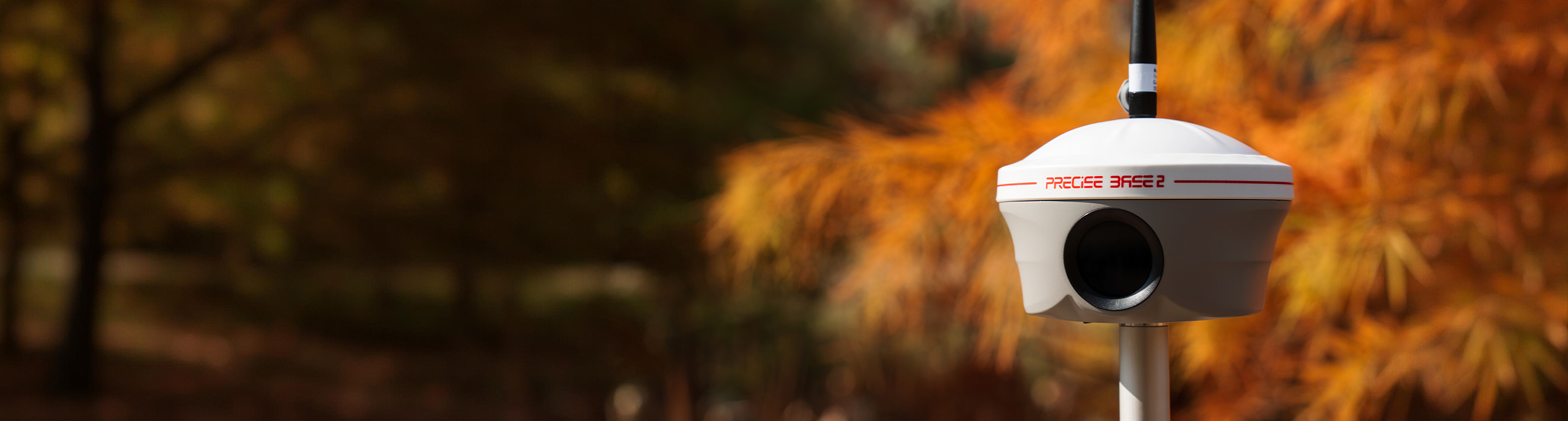
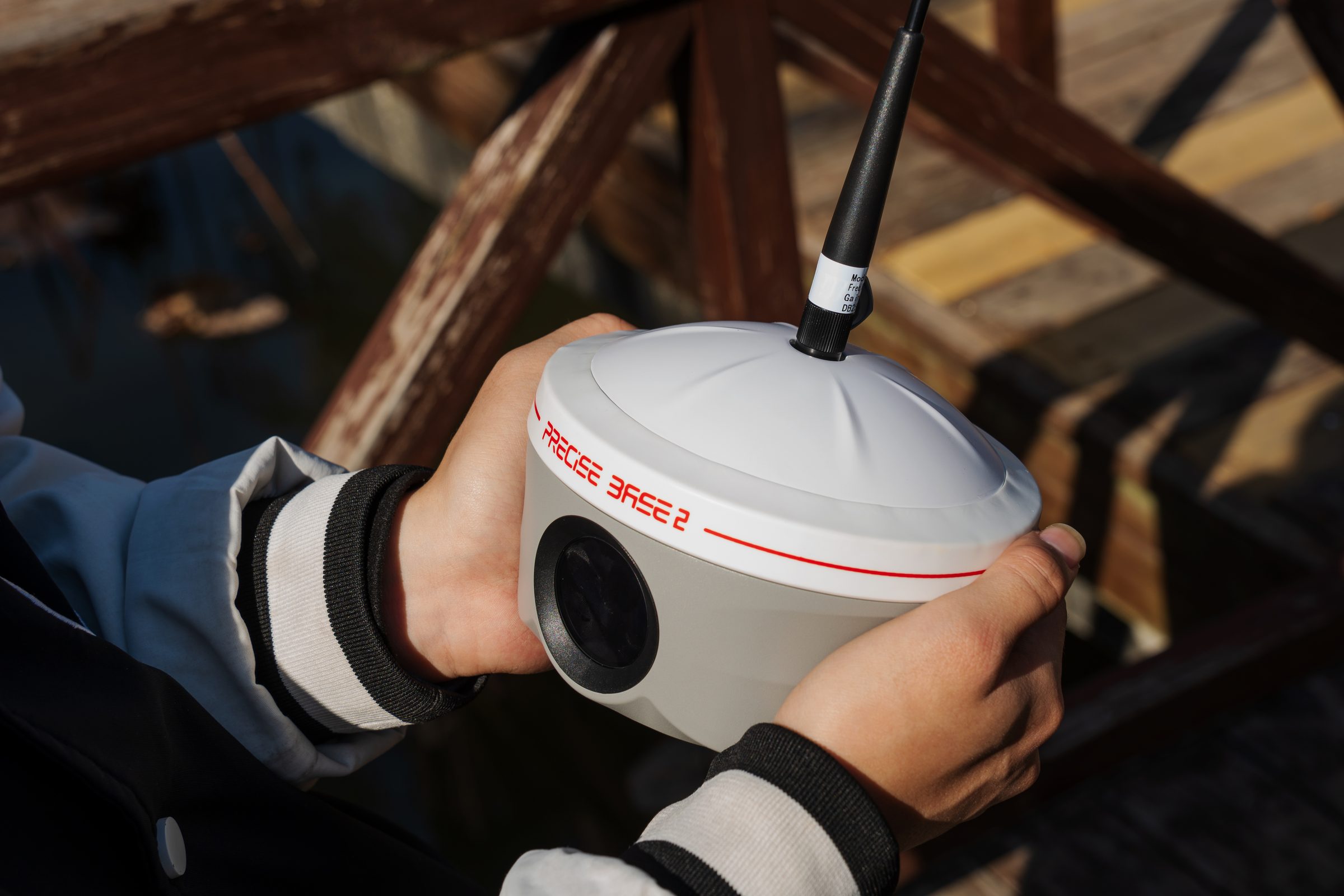
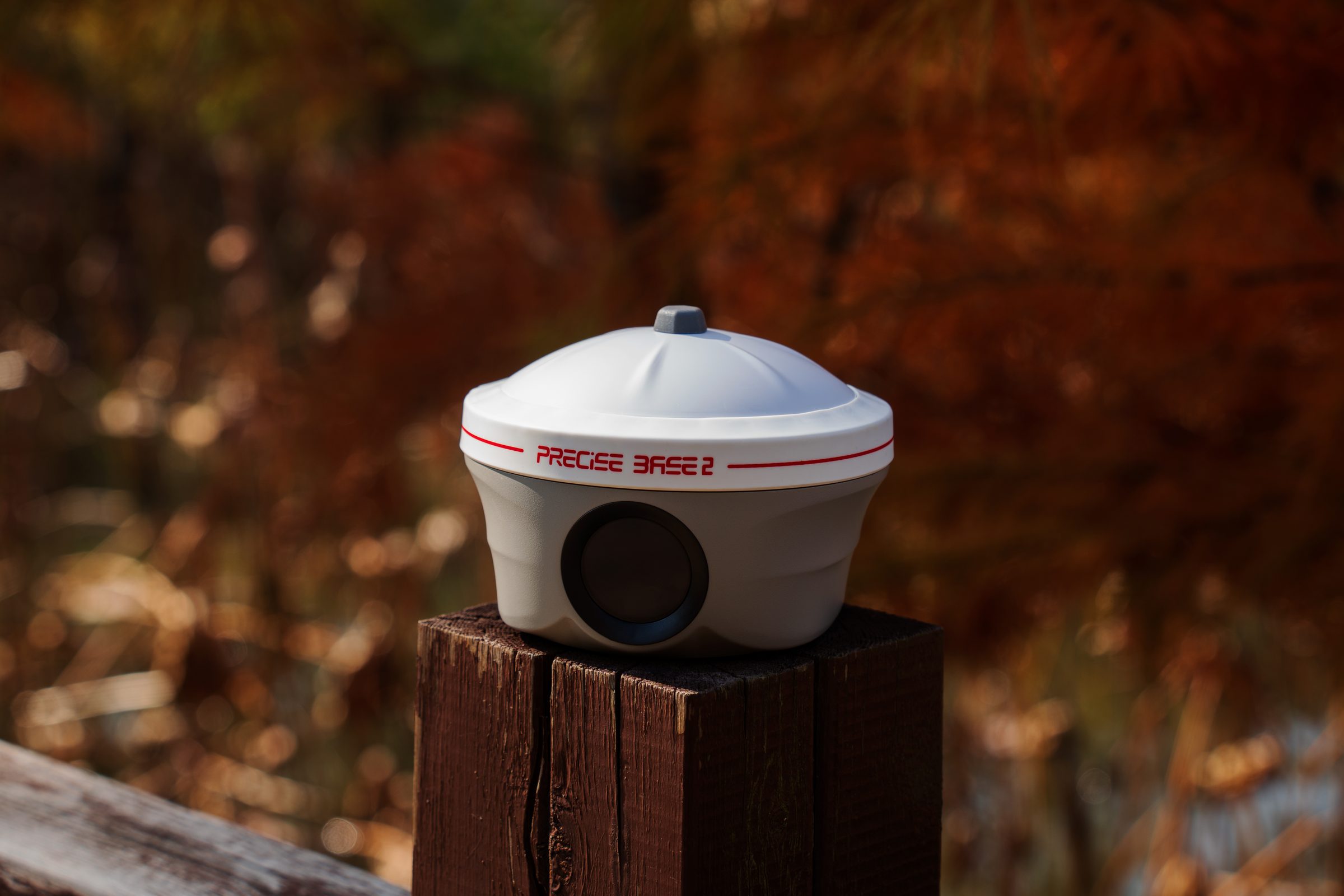
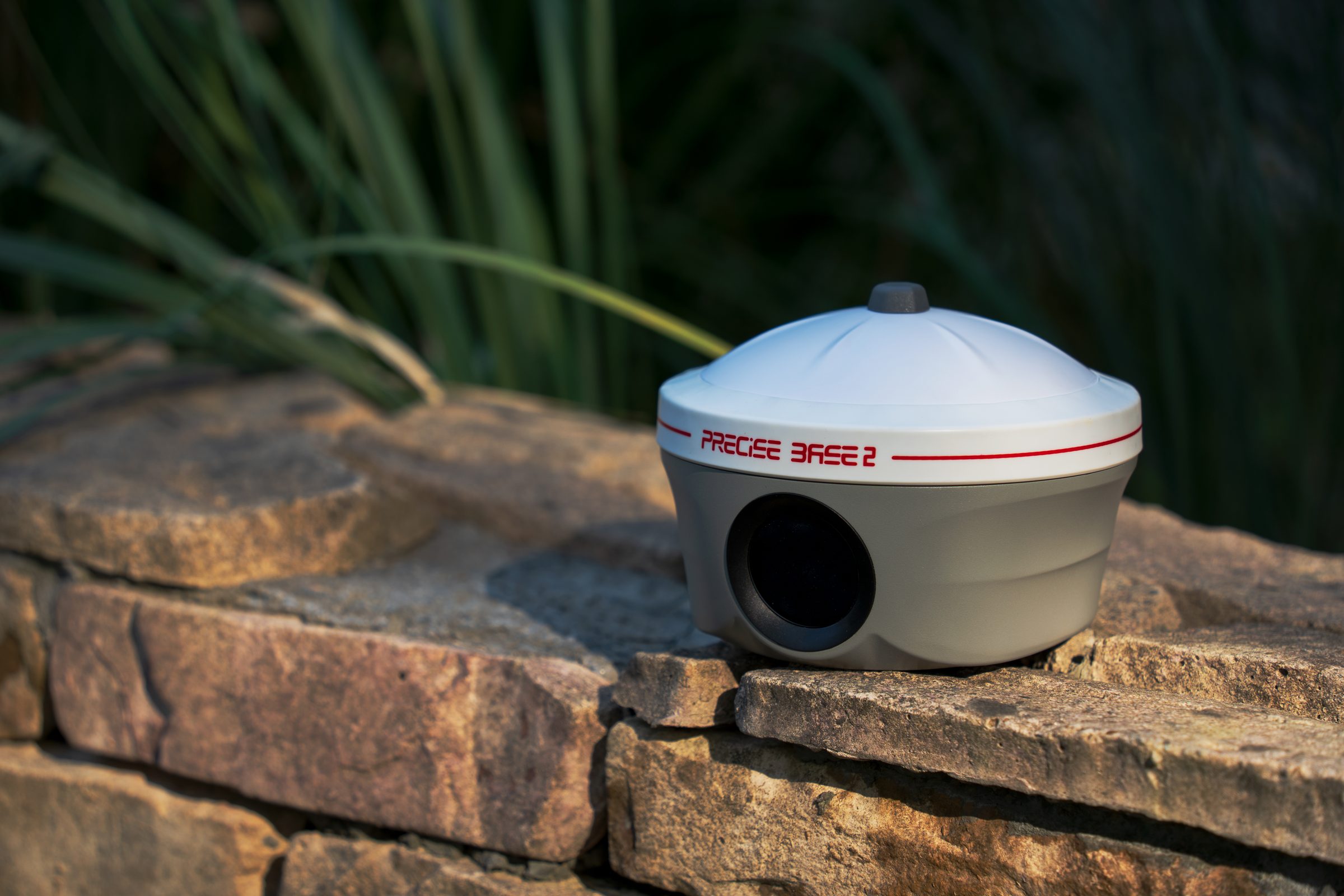
PRECISE BASE2 is a fully integrated base station (receiver, antenna, radio, and battery in one unit) that broadcasts its own RTK corrections up to 30 km in open environments, so your project doesn't depend on infrastructure you don't control.
See It In Action
BASE2 in the Field
A portable, all-in-one GNSS base station that lets you build your own RTK coverage wherever external correction services aren't available or aren't reliable.
Challenge
RTK work depends on a steady stream of correction data, but that data isn't always available. Project sites in rural or mountainous regions may have no CORS network at all. Cellular coverage can be unstable or nonexistent. And projects that need an independent, project-controlled correction source can't rely on third-party network services in the first place. Any of these situations stalls RTK work or forces a compromise on accuracy.
Solution
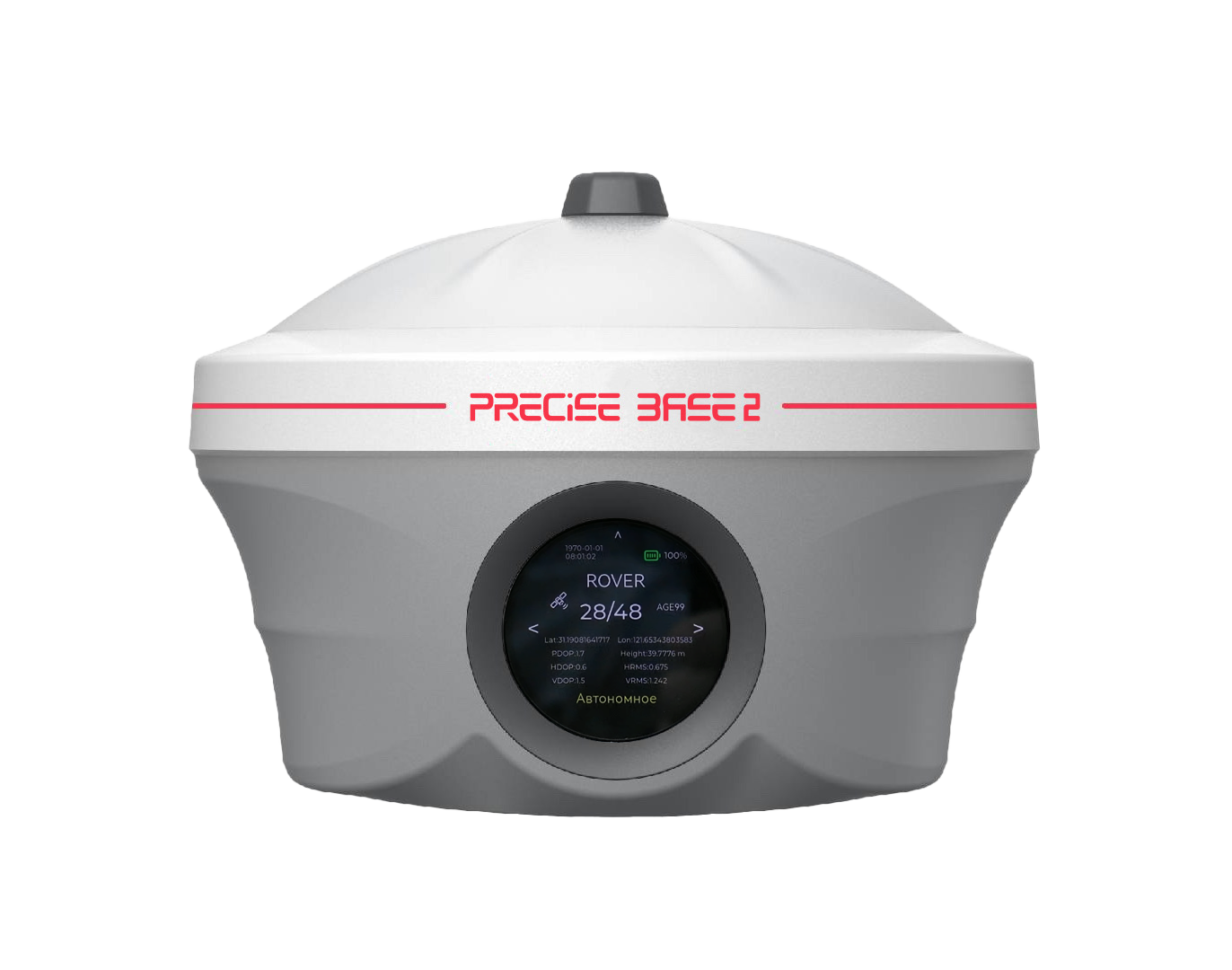
BASE2 puts a complete GNSS base station (receiver, antenna, radio, battery, and display) into one rugged unit that broadcasts RTK corrections over a 5W UHF radio to every compatible rover in range, with no external radio or cable assembly required.
Value
You're no longer dependent on whether a CORS network reaches your project site or whether the local cellular signal holds up. You bring your own reliable correction source with you.
Key Benefits
Why BASE2
All-in-One Form Factor
SPEED: Faster field readiness
Set up and start broadcasting corrections in minutes instead of assembling separate components, valuable when the base moves more than once a day.
GNSS engine, radio, and power supply are built into one housing, so deployment is position-and-power-on, not cable assembly.
5W UHF Radio, 30 km Range
RANGE: Confident long-distance coverage
One base setup can cover a larger area, such as a large farm, a construction corridor, or a multi-site survey, reducing how often it needs to be relocated.
0W
UHF Radio Power
0km
Correction Broadcast Range
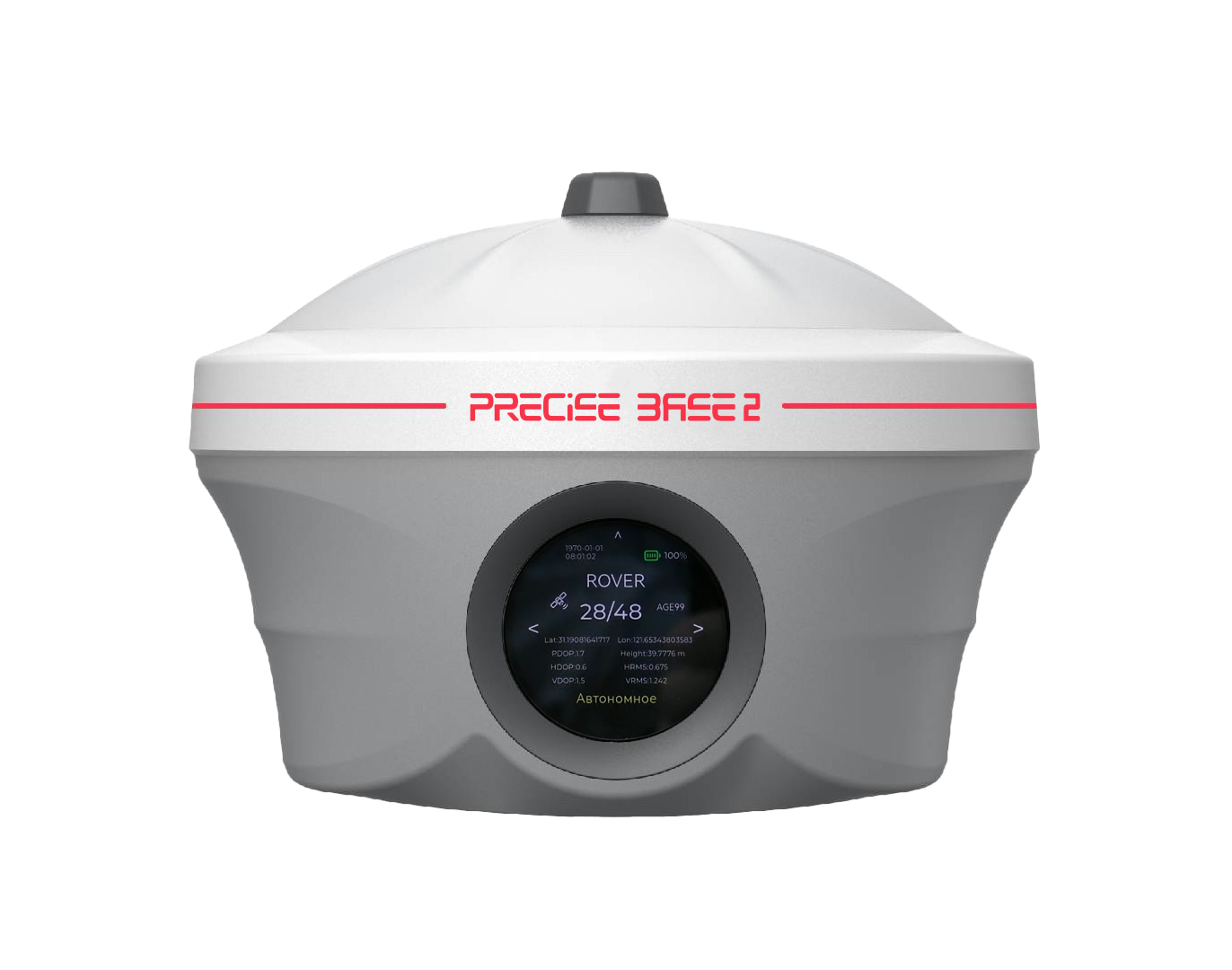
A 5W UHF radio, branded FarRadio, delivers RTK correction coverage of up to 30 km in open, unobstructed terrain; an interference self-test scans for cleaner UHF channels before broadcasting.
36-Hour Battery Life
ENDURANCE: All-day operational stability
A full day of continuous correction broadcasting without swapping batteries or plugging in external power mid-project.
0h
Battery Life (Mobile/CORS Mode)
0h
Battery Life (Base Station Mode)
Up to 36 hours of runtime in mobile/CORS mode and approximately 12 hours in base station mode on a single charge.
IP68 Rugged Durability
DURABILITY: Built for demanding sites
Keeps working through rain, dust, and the knocks of transport and setup on construction, agricultural, and mining sites.
IP0
Ingress Protection Rating
0m
Drop Resistance
IP68-rated sealing against water and dust, a magnesium-alloy body, and resistance to a 2-meter drop onto a hard surface.
Integrated Status Display
See the base's status without connecting another device
A quick glance tells you whether it's tracking satellites, broadcasting corrections, and running on adequate power, with no controller needed to check.
0.00"
Integrated Status Display
A 1.39-inch on-unit display shows GNSS, radio, and power status directly, without needing a controller, laptop, or external configuration tool.
Applications
Where It's Used
Customers
What Our Customers Are Saying
Somchai Rattanakul
Thailand
“Our farmland is spread over several kilometers, so we used to relocate the base two or three times. With the BASE2, one setup covers the entire area, and the FIX stays stable even near trees or irrigation structures. It's made our mapping work noticeably easier.”
Carolina Méndez
Chile
“For drone surveys in remote areas, I need a base station I don't have to worry about. BASE2 gives me a full day of runtime, so I can focus on the flights instead of watching the battery percentage. It's reliable from morning until evening.”
János Farkas
Hungary
“Mining sites are tough—dusty, noisy, and full of interference. BASE2 handles it better than any unit we've used before. It keeps a stable link, doesn't drift, and survives bumps and rough handling. It feels built for real industrial work.”
Ahmed Al-Sayeed
United Arab Emirates
“What stands out is consistency. Whether I'm working in open desert terrain or near construction zones in the city, BASE2 maintains a clean, reliable signal without constant adjustments. It has become our go-to base for multi-project operations.”
Technical Highlights
Engineered Detail
Advanced 1,920-Channel GNSS Engine BASE2 tracks GPS, GLONASS, BeiDou, Galileo, QZSS, SBAS, and NavIC across 1,920 channels with anti-multipath processing, giving the base a strong satellite signal foundation even in mixed or partially obstructed sky conditions.
Interference Self-Test Before and during broadcast, BASE2 scans the UHF spectrum to identify cleaner channels, reducing the chance that local radio interference disrupts the correction link to rovers in the field.
Fully Integrated, Field-Rugged Design By combining the GNSS receiver, radio, antenna, and battery into a single magnesium-alloy, IP68-rated housing, BASE2 removes the cable connections and separate components that are the most common failure points in traditional base station setups, while still meeting the drop and environmental resistance needed for construction, agricultural, and mining sites.
Technical Specifications
Full Spec Sheet
GNSS
Positioning & Radio
Communication & Storage
Physical & Power
How It Works
From Setup to Result
Position the base
on a known point or establish a new base location, and power on the unit.
Confirm status on the integrated display
satellite tracking, radio broadcast, and power level are all visible without connecting another device.
The 5W UHF radio broadcasts RTK corrections
to compatible rovers across the working area, up to 30 km in open environments, with the interference self-test helping maintain a stable channel.
Rovers connect and work across the project
using BASE2 as their local correction source, independent of external network availability.
The base keeps running through the full shift
up to 12 hours in base station mode, and its IP68-rated, magnesium-alloy housing holds up to field conditions without special handling.
FAQ
Common Questions
BASE2 is a fully integrated, portable GNSS base station combining a high-precision multi-constellation receiver, antenna, 5W UHF radio, and battery in one compact unit. It broadcasts RTK corrections to compatible rovers, letting you build your own local RTK coverage without relying on CORS or NTRIP network services.
Up to 30 km in open, unobstructed environments. Actual range depends on terrain, antenna height, obstructions, and local radio interference. BASE2's interference self-test helps maintain a stable link by identifying cleaner UHF channels before and during broadcast.
Up to 36 hours in mobile/CORS mode, or approximately 12 hours in continuous base station mode, on its 7.2V, 13,200 mAh battery.
Yes. BASE2 is rated IP68 for dust and water protection, built with a magnesium-alloy housing, rated IK08 for vibration resistance, and tested to withstand a 2-meter drop onto a hard surface.
Yes. The integrated display shows GNSS tracking, radio broadcast, and power status directly on the unit, so you can confirm the base is operating correctly before leaving it unattended.
BASE2 is designed to work with PRECISE X7, X7 Lite, and X rover receivers, as well as other RTK rovers compatible with its supported correction formats and radio protocols.
Get in Touch
Talk to PRECISE About BASE2
Tell us about your project and we'll route it to the right PRECISE team.
- Sales: sales@precise-geo.com
- Support: support@precise-geo.com
Build Your Own RTK Coverage.
Talk to our team about matching BASE2 to your project's terrain and coverage needs.