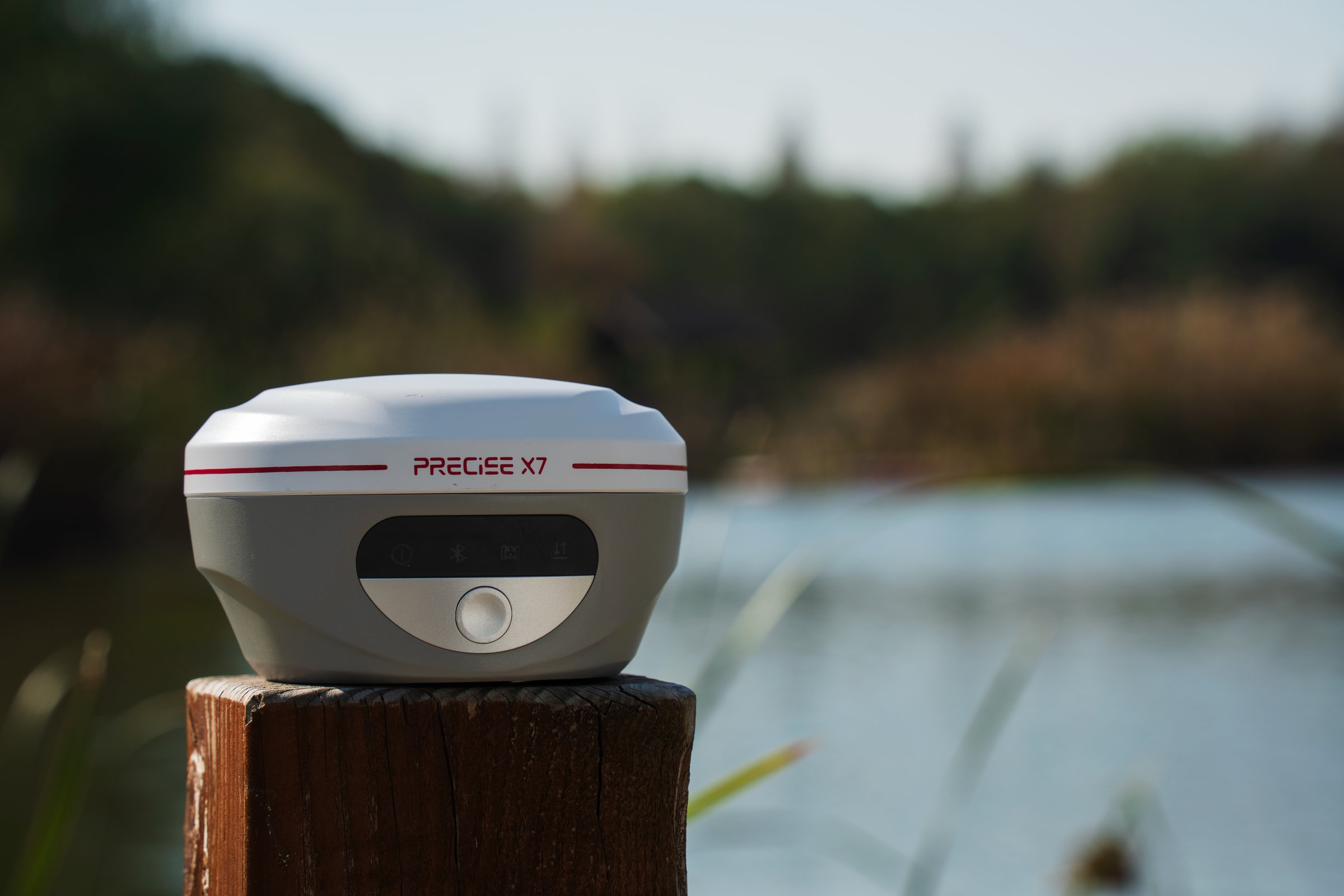
Field-Ready Engineering
Field-ready isn't a slogan. It's an IP rating, a temperature range, and a drop-test number.
Every PRECISE product category discloses its own ingress protection class, operating temperature range, and mechanical durability specification, matched to how that product is actually used in the field, from bare-handed pole receivers to cab-mounted displays.
What It Measures
Four Distinct, Testable Specifications
Environmental durability isn't one number; it's a combination of several distinct, testable specifications.
Ingress Protection (IP Rating)
The first digit rates protection against dust and solid particles; the second rates protection against water. A rating of IP68 means fully dust-tight and protected against continuous immersion; IP54 means protected against dust ingress sufficient to not interfere with operation, and against water splashed from any direction.
Operating Temperature Range
The range within which the device is rated to function normally; this determines whether a product can be used on a freezing morning or a hot afternoon without derating or shutting down.
Storage Temperature Range
A separate, usually wider range for when the device is powered off (in a vehicle, a site container, or transit) that doesn't need to support active operation but does need to prevent damage.
Mechanical Durability
For handheld and pole-mounted devices, additional ratings like drop resistance (e.g., a rated drop height with the pole attached) and vibration resistance (IK rating) describe how the device holds up to the physical abuse of daily field handling, not just weather exposure.
A device's appropriate rating depends on how it's actually held and used, not on one blanket standard applied across the whole line. Here's how that plays out across the PRECISE lineup.
Across the PRECISE Line
Field-Ready Ratings by Product
| Product | Category | Ingress Protection | Operating Temp. | Storage Temp. | Mechanical Durability |
|---|---|---|---|---|---|
| X7 | RTK Receiver | IP68 | −45°C to +75°C | −55°C to +85°C | IK08 vibration; 1.8 m drop resistance with pole |
| S7 | 3D Scanner | IP64 | −30°C to 65°C | −40°C to 70°C | N/A |
| S2 | 3D Scanner | IP5X | −30°C to 65°C | −40°C to 70°C | N/A |
| E2 | Machine Guidance (display/control unit) | IP67 | −30°C to +75°C | −40°C to +85°C | N/A |
| T3 | Total Station | IP54 | −20°C to +50°C | −30°C to +55°C | N/A |
Why the ratings differ by category, not by corner-cutting: X7 carries the highest ingress and mechanical rating in this table because it's a bare-handed, pole-mounted receiver that gets set down in mud, dropped from working height, and rained on directly, all day, every day, making it the harshest direct exposure of any product here. E2's control unit lives inside (or on) an excavator cab, still exposed to weather and vibration but with some structural shelter from the machine itself. T3 is a tripod-mounted precision instrument, typically handled more carefully and for shorter exposure windows than a pole receiver, so its IP54 rating reflects that different usage pattern, not a lower engineering standard. Matching the rating to the realistic exposure of the product category is the more honest approach than applying one blanket number to every device regardless of how it's actually used.
Beyond IP and temperature: mechanical design for real conditions. Not every field-readiness feature shows up as an IP or temperature number. PRECISE A Pro's Terrain Compensation, for example, is engineered specifically so auto-steering keeps working on sloped and uneven ground (terrain that would defeat an uncorrected system regardless of its environmental rating), and A Pro's guidance is built to hold the line in low-light and night operation as well as daylight. Field-readiness spans both environmental sealing and the operational design decisions that keep a system working in real, imperfect field conditions.
FAQ
Common Questions
No. The rating is matched to how that product is actually handled, not to a fixed quality tier. See "Why the ratings differ by category" below for how that plays out between X7 and T3 specifically.
Operating temperature is the range within which the device is rated to function normally while powered on and in use. Storage temperature is a separate, typically wider range for when the device is off (sitting in a vehicle, a site container, or in transit), where the requirement is that the device isn't damaged, not that it's actively working.
These are rated maximums under standard test conditions, not an unconditional guarantee against every possible scenario. Real-world durability also depends on how the device is handled, maintained, and used within its rated conditions. An IP68 rating means the device is tested to that ingress standard, not that it's indestructible under all circumstances.
X7, among the products with disclosed environmental specs. Its ratings (see the table above) are the highest in this comparison across ingress, vibration, drop resistance, and operating range, reflecting its role as a handheld, pole-mounted receiver carried and set down constantly in the field, a harsher daily-handling profile than a cab-mounted display or a tripod instrument.
The IP, temperature, and mechanical ratings listed here are the product's rated hardware specifications and apply regardless of region. Region-specific factors like available cellular bands, correction service coverage, or import certifications are separate considerations; confirm those with your PRECISE contact for your specific market.
No. It also includes operational design choices that keep a system working under conditions no IP number captures. See A Pro's Terrain Compensation and night-operation guidance above for a concrete example.
Working in conditions that would take out ordinary equipment?
Tell us about your site: temperature extremes, dust, water exposure, or rough daily handling, and a PRECISE engineer will confirm which product's environmental and mechanical ratings actually fit your conditions.